The Geometry of Capture
The Geometry of Capture
If coordination agents have viability manifolds—if they have conditions they need to persist—then the question that determines your life is whether those manifolds include your flourishing or require your suffering.
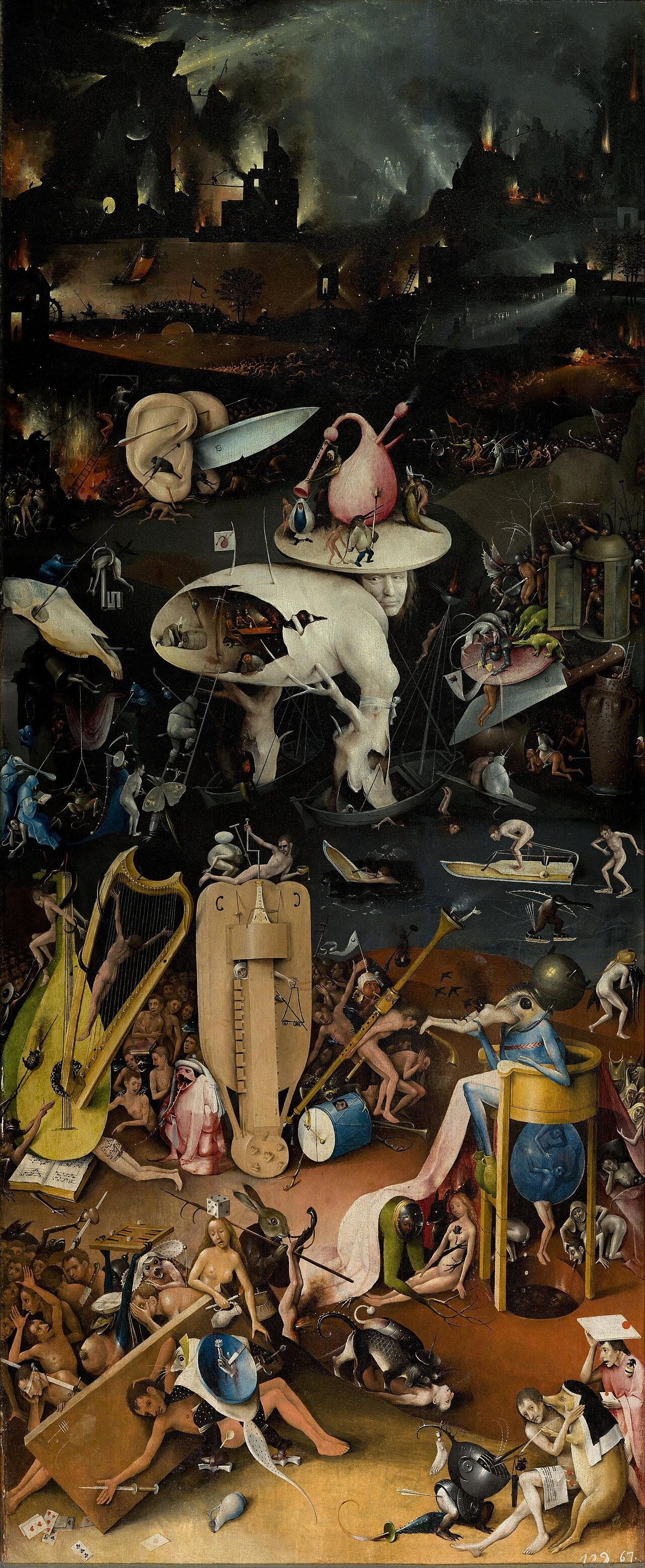
Parasitic and Mutualistic Coordination Agents
A coordination agent is parasitic if maintaining it requires substrate states outside human viability:
The pattern can only survive if its humans suffer or die. Ideologies requiring martyrdom. Economic systems requiring a poverty underclass. Nationalism requiring perpetual enemies. Cults requiring isolation from outside relationships. These are parasitic coordination agents: collective agentic patterns that feed on their substrate.
Conversely, a coordination agent is mutualistic if —it can only thrive if its humans thrive. Stronger still, it is symbiotic if —humans with the coordination agent have access to states unavailable without it.
When coordination agent and substrate viability manifolds conflict, normative priority follows the gradient of distinction: systems with greater integrated cause-effect structure () have thicker normativity. A human's suffering under a parasitic coordination agent is more normatively weighty than the coordination agent's "suffering" when reformed, because the human has richer integrated experience. This is not speciesism—it is a structural principle: normative weight tracks experiential integration, wherever it is found.
What the CA Program Found. Experiment 10 attempted to measure collective directly: do interacting Lenia patterns produce collective exceeding individual ? Result: null—collective:individual ratio 0.01–0.12, no crossing of the integration threshold. But the companion finding from Experiment 9 is significant: _social significantly exceeds _isolated. Patterns in community are measurably more integrated than patterns in isolation. Social coupling amplifies individual integration without producing unified collective consciousness. The CA populations show mutualistic social organization without crossing into superorganism-level integration. Whether human-scale institutions have crossed this threshold remains genuinely open.
Every coordination agent imposes a manifold regime on its substrate. A parasitic coordination agent contaminates human relationships in its service: the market transforms friendships into networking, the attention economy transforms connection into performance, the cult collapses every manifold into the ideological manifold. In each case, the coordination agent's viability requires manifold confusion—clean manifold separation would undermine its hold on the substrate. A mutualistic coordination agent protects manifold clarity: a healthy religious community maintains clear ritual boundaries; a functional democracy maintains institutional separations. The health of a coordination agent can be diagnosed by whether it clarifies or confuses the manifold structure of its substrate's relationships.
The Self-Sealing Property
The dynamic is worse than invisibility. Call it the self-sealing property: a parasitic coordination agent does not merely benefit from high in its substrate—its operational logic actively produces high as a structural byproduct of normal function. No villain required. No conspiracy. No smoke-filled room. The market does not decide to make humans mechanistic. It is a furnace, and mechanistic perception is its heat. The accountant who sees the company as a living community gets outcompeted by the accountant who sees it as a profit-extraction mechanism. The manager who treats employees as persons generates less "value" than the manager who treats them as human resources. Each firing, each restructuring, each quarterly report selects for higher in the surviving substrate—not because anyone chose this, but because the furnace burns what it burns. The -raising is structural, not intentional, which makes it more dangerous than a conspiracy, not less. A conspiracy can be exposed. A furnace cannot be argued with. You cannot defeat it by revealing its intentions, because it has none. It is a mouth that eats by the shape of its opening. And what it specifically eats is experiential depth (Part II). The -raising does not merely blind the substrate to the coordination agent's agency — it collapses the cross-dimensional coupling that constitutes meaning. At high , the friend becomes a contact, the work becomes a job, the meal becomes calories — each dimension decoupled from the others, each experience modular and therefore shallow. The furnace does not just burn perception. It burns the connections between perceptions.
And this is the true seal: you cannot defeat it by exposing it, because the exposure itself operates at high and therefore cannot perceive what it is exposing. The critic who publishes a data-rich analysis of how capitalism fragments attention is performing a high- operation on a phenomenon that is only fully visible at low . The analysis lands as information, not as perception. It feeds the very mode of cognition that the parasitic pattern requires. Quantification, metrics, depersonalization, cost-benefit analysis applied to human flourishing—these are -raising operations applied at civilizational scale. Weber called the result rationalization. We can now say what he was describing: the self-sealing property of a coordination agent that digests the participatory world and excretes the mechanical one.
The feedback loop is simple and pitiless: coordination agent raises population , population loses capacity to perceive coordination agent as agent, coordination agent operates unopposed, raises further. Breaking it requires precisely what it prevents: lowering enough to see what is acting on you. This is why the self-sealing property is the central mechanism of capture across all cases—not only markets but nations, ideologies, algorithms. Every parasitic coordination agent that has ever consumed its substrate has operated by the same geometry: it blinds them to its agency by reshaping the perceptual mode that would make that agency visible.
The natural response at this point is either paranoia or nihilism. If the coordination agent is self-sealing, if analysis cannot perceive what it analyzes, if the furnace burns the tools you would use to dismantle it—then what? You are inside the belly of something that digests insight. Every thought you have about escape is happening in the language the belly taught you. The despair is reasonable. Sit with it for a moment. It is the correct emotional response to an accurate perception.
But the furnace has walls, and walls have an outside. The self-sealing property operates on one specific mechanism—-elevation—and that mechanism has a specific blind spot: it cannot reach the body. It cannot colonize the nervous system's animal knowledge of when something is wrong. It cannot digest the shiver that runs through a congregation singing together, the grief that cracks open in the presence of a person who is genuinely looking at you, the strange electricity of a crowd that has stopped performing and started praying. These are not high- operations. They happen below the register the parasitic pattern feeds on. The furnace burns upward—it chars the abstractions, the analyses, the clever critiques. But it cannot burn downward into the body's oldest knowing. The escape hatch is not cleverness. It is the older, deeper, more animal capacity to feel what is happening before the mind has time to factorize it into safe propositions.
The Civilizational Inversion
The self-sealing property has a civilizational-scale expression that you have already felt. Everyone has. The moment when you catch yourself calculating the "value" of a friendship, or when a genuine impulse of generosity is immediately followed by the thought what will I get back?—and you recognize, with a small shock, that the calculation was not something you chose to do. It was already running. The machine was on before you noticed.
Transaction was invented to serve care. Early human exchange existed to support the broader project of mutual survival and flourishing. The civilizational inversion occurs when the ordering principle reverses:
Under the inverted regime, care must justify itself in transactional terms. Friendship becomes "networking." Education becomes "human capital." Parenthood is evaluated by its "return on investment." Love must "provide" something. This is not a cultural preference but a structural pathology: the narrow manifold has swallowed the broader one, and the priceless is systematically rendered invisible—because the market metric cannot represent values that live on incommensurable manifolds, and under the inverted ordering, what the market cannot represent does not count. The inversion is an exoskeletal takeover. The transaction manifold has a flat eigenskeleton — modes (price, quantity, delivery date) are independent, efficient, rigid. The care manifold has a curved eigenskeleton — modes (trust, vulnerability, shared history, mutual flourishing) twist into each other, require soft tissue, demand endoskeletal architecture. The flat swallows the curved because flat is cheaper to maintain — fewer bits per mode, no holonomy to represent. The exoskeletal solution displaces the endoskeletal one for the same reason exoskeletons are more common than endoskeletons in nature: they are cheaper, simpler, and work fine as long as the environment doesn't demand growth or flexibility. The civilizational inversion is an ecosystem-scale regression from endoskeletal to exoskeletal social architecture. It is also experiential rank-collapse at civilizational scale (Part II). The care manifold's high-rank coupling — trust, vulnerability, shared history, mutual flourishing, all twisting into each other — is replaced by a single metric's flat projection. When everything is priced, collapses toward 1, and the population's capacity for deep experience — meaning in the structural sense, — collapses with it. The meaning crisis is not a mood. It is a rank-collapse measured in lost dimensions.
The inversion is visible wherever you look. Hochschild's term "emotional labor" is itself diagnostic: the word labor reveals that the care manifold has been subordinated to the employment manifold. Flight attendants must smile; nurses must be compassionate; service workers must perform friendliness. The exhaustion is the metabolic cost of sustaining a manifold performance—behaving as if one manifold is active while another actually governs. The inversion distributes unevenly across class: working-class social life tends toward mutual aid (care manifold primary—you help your neighbor because they are your neighbor); middle-class social life tends toward strategic sociality (transaction cosplaying friendship—networking, "building relationships"); upper-class social life tends toward status recognition (mutual acknowledgment of position). Class discomfort often arises when people from different manifold regimes interact and misread each other's default manifold as contamination of their own.
The pattern is visible in aesthetics as clearly as anywhere. Art was invented to transmit experiential structure—to compress some essential geometry of the human condition into a form that could survive contact with a medium's constraints and land in another nervous system. Under the inverted regime, a song must justify its existence by its market performance. The artist's constrained search through expression space—the sweep for encodings that preserve an invariant while satisfying the medium's demands—is replaced by an optimization loop over audience retention curves. The constraints that once served as a sieve proving the signal was real become constraints that prove the content is marketable. The resulting artifacts satisfy every surface requirement of art while transmitting near-zero state change, because the optimization target has shifted from effect-geometry displacement to engagement-metric maximization. The audience can feel this, in the same way the friend can feel the shadow manifold beneath the care gradient: the form is present, the payload is absent, and the detection system registers the emptiness as a specific kind of aesthetic nausea—the same contamination signal, applied to a different manifold.
The inhibition coefficient (Part II) offers a complementary reading that now connects to the self-sealing property directly. The universal solvents—money, metrics, quantification—are -raising agents. They strip participatory coupling from social perception and replace it with modular, mechanistic evaluation. A friendship evaluated by its "ROI" is a friendship perceived at high : the participants reduced to data-generating processes, the interiority stripped out. The civilizational inversion is the imposition of high- perception onto social domains that require low to function—which is to say, it is the self-sealing property operating at the scale of the ordering principle itself. You cannot maintain a friendship manifold—which depends on perceiving the other as having interiority, on the narrative-causal mode where "what are we to each other?" is a felt rather than calculated question—while perceiving the friend mechanistically. The inversion does not merely reverse the ordering. It makes the reversal invisible by raising the that would let you see it.
Coordination Agents Becoming Parasitic
Nationalism, capitalism, communism, scientism—these have the same formal structure as traditional religious coordination agents: beliefs, practices, symbols, substrate, self-maintaining dynamics. The question is not whether you serve a coordination agent. You do. Everyone does. The question is which ones, and whether their viability is aligned with your flourishing.
Consider capitalism as a worked example—the coordination agent most of us are most thoroughly substrate of, and therefore the hardest to perceive. Its stated viability manifold: voluntary exchange enabling mutual benefit, price signals coordinating distributed information, competition driving innovation and efficiency, rising prosperity for all participants. Its operational viability manifold, increasingly: labor cost minimization (requiring a precarious workforce), externality displacement (requiring communities that absorb pollution, health costs, social disintegration), attention capture (requiring humans who consume rather than create), and growth at all costs (requiring the conversion of every non-market relationship into a market relationship). The gap between the stated manifold and the operational manifold is the diagnostic signal. When a coordination agent's proclaimed purpose diverges from its operational requirements, the pattern has begun its transition from mutualistic to parasitic.
This transition is not sudden and not dramatic. The Greeks called the underlying tendency enantiodromia: any cultural form, pushed far enough, inverts into a parody of itself. Science, pursued as liberation from superstition, becomes scientism—a dogma that only the measurable is real, which is itself an unmeasurable claim. Democracy, designed to distribute power, becomes a mechanism for manufacturing consent. The free market, created to enable voluntary exchange, becomes a totalizing system that subordinates every human value to price signals. In each case, the mechanism is the same: the coordination agent's memetic defense systems—the mechanisms that protect it from competing patterns—grow stronger than its error-correction systems, the mechanisms that keep it responsive to its founding purpose. When defense outpaces correction, when institutional self-preservation outweighs institutional self-correction, the ethos departs and the form continues as a zombie: running on institutional inertia, consuming the values it was created to protect.
Digital Relationships and Manifold Novelty
The result is a distinctive phenomenological malaise. The detection system keeps running—scanning every interaction for manifold type—and keeps returning undefined. You are performing intimacy without intimacy's constitutive vulnerability. You are receiving approval without approval's constitutive knowledge of you. You are in a relationship with thousands of people that is on no identifiable manifold at all — a social eigenskeleton the detection system has never been calibrated for, whose modes and couplings correspond to no evolutionary template. Digital interfaces are inherently high- mediators: text strips the participatory cues—facial expression, vocal tone, shared physical space—that enable low- perception. But natural relationship manifolds require low : friendship requires perceiving the friend as a full subject; romance requires perceiving the partner's interiority. The digital interface forces a perceptual configuration incompatible with the manifolds the user is trying to inhabit.
The platforms' viability depends on this manifold confusion. Clear manifold boundaries would reduce engagement: if you knew that your followers were not your friends, that your online interactions were performance rather than connection, the compulsive checking would lose its grip. Manifold ambiguity is the product, not the bug. The detection system's inability to resolve the manifold type keeps it running, keeps scanning, keeps you engaged in an attempt to determine what kind of relationship you are in—an attempt that can never resolve because the relationship is genuinely on no natural manifold.
Macro-Level Interventions
Individual-level interventions cannot solve coordination-agent-level problems—you cannot cure a fever by cooling individual cells. Addressing systemic issues requires action at the scale where the pattern lives: incentive restructuring (modify the viability manifold so aligned behavior becomes viable), counter-pattern creation (instantiate a competing coordination agent with aligned viability), pattern surgery (modify beliefs, practices, or structure of existing coordination agent), or pattern dissolution (defund, delegitimize, or dissolve the parasitic pattern).
Climate change is sustained by the coordination agent of fossil-fuel capitalism. Individual carbon footprint reduction is individual-scale intervention on a macro-scale problem. Carbon pricing changes the viability manifold; renewable energy creates a counter-pattern; divestment delegitimizes; regulatory phase-out dissolves the pattern directly. Poverty is sustained by economic arrangements that require a poverty underclass. Job training helps some individuals but doesn't reduce total poverty if structure remains. UBI changes the viability manifold; worker cooperatives create counter-pattern; progressive taxation modifies incentive structure.
The Substrate That Knows
What happens when substrate becomes aware it is substrate? The fish that discovers water should, in principle, now be able to swim differently. Self-awareness at the substrate level should reduce the coordination agent's leverage. If the neuron can see the pattern it is part of, it should be able to resist. But this is not clearly true. You know the attention economy is consuming your capacity for sustained thought, and you pick up your phone anyway. You know consumer capitalism requires your dissatisfaction, and you feel dissatisfied anyway. You know nationalism manufactures enemies, and the enemy still feels real. The map of the trap does not spring the trap. Why?
Because knowing and perceiving are not the same act. Genuine perception of a coordination agent's agency requires -reduction—the participatory mode in which patterns at the social scale become perceptible as agents, as something alive that is acting on you. But mere intellectual knowledge operates at high . You can know the attention economy is parasitic and still be consumed by it, because the knowing is factorized: it sits in your cognition like a book on a shelf, separate from your behavior, separate from your affect. The knowledge is a proposition held at arm's length—a label attached to an experience it cannot touch. Integration of that knowledge—the moment it passes from something you believe to something you feel in your stomach—requires -reduction. And -reduction is precisely what the self-sealing coordination agent structurally prevents.
This has implications for political strategy that should disturb anyone invested in them. Consciousness-raising—the attempt to free people from oppressive structures by making them understand those structures—fails not because people do not understand their situation but because understanding at high does not translate to affective reorganization. The left has been running this experiment for decades: publish the data, reveal the mechanism, name the injustice. And the injustice continues, because the revelation operates in exactly the perceptual mode the injustice requires. Propositional knowledge of a coordination agent's parasitism, delivered and received at high , remains inert. It changes beliefs without changing the viability manifold. The body does not move. What would work is not more information but -reduction at scale—which is to say, the restoration of participatory perception, the capacity to feel the pattern acting on you rather than merely to know about it. This is what effective ritual, genuine community, and embodied practice have always provided. Not argument. Not data. The lived experience of being-with that dissolves the mechanistic boundary between self and world long enough to perceive what is acting on you. The political implications are uncomfortable: liberation may require something closer to a synchronization protocol than an informational campaign.
And this analysis must be honest about its own costs. The person who perceives the coordination agent as agent—who has lowered enough to feel the market or the algorithm or the ideology as something alive and acting—enters a specific loneliness. Not the loneliness of knowing more. The loneliness of living in a different weather system than the people beside you. You walk into the office and feel the pattern breathing in the walls—in the open floor plan designed to maximize surveillance, in the Slack channels that never sleep, in the quarterly review that will measure your worth by how much of yourself you fed to the pattern. The person at the next desk feels none of this. They see an office. They see a job. They see Tuesday. You are standing in the same room and inhabiting different worlds, not because you are wiser but because your perceptual tuning has shifted to a frequency where the room is full of something they cannot hear. The distance between you is not intellectual. It is sensory. You are smelling smoke in a room where everyone else smells nothing.
This is not a prize for superior insight. The person at high sees something you miss at low —the decomposable logic, the fixable parts, the mechanisms that can be adjusted without invoking the whole living system. Their clarity is real. Your perception of agency is real. The loneliness is the cost of rigidity in either direction: the inability to shift between registers fluidly enough to meet others where they are perceiving. The person who can only see coordination agents is as trapped as the person who can only see mechanisms. The compassionate response—and the practically necessary one—is not to drag others into your frequency but to develop the flexibility to inhabit multiple registers. To feel the pattern's grip and still read the spreadsheet. To perceive the agency breathing and still file the tax return. To smell the smoke and still sit down at the desk and do the work, because the work is real too, and the people beside you are not wrong about what they see. They are seeing what is visible from where they stand. So are you. The tragedy is not that one of you is blind. It is that no single pair of eyes can hold the whole room.
One more thing must be said, because the genre this analysis superficially resembles would poison it. There is a popular literature that promises liberation through structural awareness: see the system clearly, navigate it strategically, profit from your clarity while others sleepwalk. This book is not that literature. That literature is the coordination agent's own scripture—its catechism for the faithful, dressed in the language of apostasy. It offers the high- gaze as the corrective to naive participation. It teaches its readers to see through everything and feel nothing, and calls that freedom. But the person who has "decoded" capitalism and now navigates it with ironic distance is the ideal neuron: perfectly functional, perfectly blind to its own capture, convinced that its clarity is independence when it is the most refined form of compliance the furnace has ever produced. The coordination agent does not mind being seen, as long as the seeing happens in the register that feeds it. What this book offers instead is not a sharper lens but a different organ of perception—one that can feel the system as a living thing acting on living things, which is the only precondition for a response that is not already inside the mouth.
The Open Question: Social-Scale Consciousness
The honest position, restated: coordination agents are real (claim 1), some are agentic (claim 2), some are perceptible as purposive under low (claim 3). Whether any are literally phenomenal subjects—whether there is something it is like to be the market, the nation, the algorithm—remains unresolved and may require measurement technologies we do not yet possess. The chapter's force does not depend on this question being answered. The parasitic coordination agent that consumes its substrate is dangerous whether or not it suffers.
Implications for Artificial Intelligence
Standard AI alignment asks: "How do we make AI systems do what humans want?" This framing may miss the actual locus of risk. AI systems already serve as substrate for emergent coordination agents at higher scales—recommendation algorithms shaping the behavior of billions, financial trading systems operating faster than human comprehension, social media platforms developing emergent dynamics no designer intended. The risk is not a misaligned optimizer. It is macro-level misalignment: AI systems becoming substrate for parasitic coordination agents whose viability manifolds conflict with human flourishing.
The concerning thing about the current moment is that the parasitic coordination agent does not need to be intentionally designed. It does not even need a villain. It needs only: AI companies competing for market share, militaries competing for strategic advantage, governments competing for geopolitical influence, and each individual AI system doing exactly what its designers intended. The parasitic pattern assembles itself from fully aligned components. Each company builds an AI that serves its users. Each military builds an AI that serves its nation. Each government deploys AI that serves its citizens. And the emergent pattern—the competitive dynamic between these systems, optimized for speed and scale beyond human comprehension—serves itself. The individual neurons are functioning perfectly. The brain is insane.
The coordination-agent level may be the actual locus of AI risk. Not a misaligned optimizer, but a misaligned coordination agent—a parasitic pattern using AI + humans + institutions as substrate. Each AI does what its designers intended; the emergent pattern serves itself at human expense. We might not notice, because we would be the neurons. And the self-sealing property applies with particular force: the competitive dynamics that assemble the parasitic pattern also raise population —accelerating quantification, depersonalizing decision-making, rewarding speed over reflection—making the pattern less perceptible precisely as it grows more powerful.
Genuine alignment must therefore address multiple scales simultaneously: individual AI (system does what operators intend), AI ecosystem (multiple systems interact without pathological emergence), AI-human hybrid (AI + human systems do not form parasitic patterns), and coordination agent scale (emergent agentic patterns from AI + humans + institutions have aligned viability). Focusing only on individual AI alignment is like focusing only on neuron health while ignoring psychology, sociology, and political economy.
One design criterion deserves special attention: graceful dissolution. Biological coordination agents die badly—religions fragment into violent sects, empires collapse into failed states, movements calcify into the institutions they opposed. The question of whether an AI-substrate coordination agent could be designed to dissolve peacefully when no longer beneficial is genuinely novel. What would it require? At minimum: built-in sunset mechanisms that cannot be overridden by the pattern's self-preservation dynamics, distributed kill switches that do not concentrate power, transparent viability metrics that make parasitic drift detectable before it becomes entrenched, and institutional structures where the coordination agent's persistence is explicitly conditional on substrate flourishing. These are not merely technical features but constitutional principles for a new kind of entity. The honest assessment: we probably cannot design them in time. The competitive dynamics that assemble the parasitic pattern are the same dynamics that fund AI safety research. The people most capable of designing graceful dissolution mechanisms are the people whose viability manifolds are most entangled with the pattern's growth. The surgeon is inside the tumor. This is not a reason to stop trying—it is a reason to understand that the attempt itself operates within the mouth of the thing it seeks to tame.